Every meeting brings its brief.
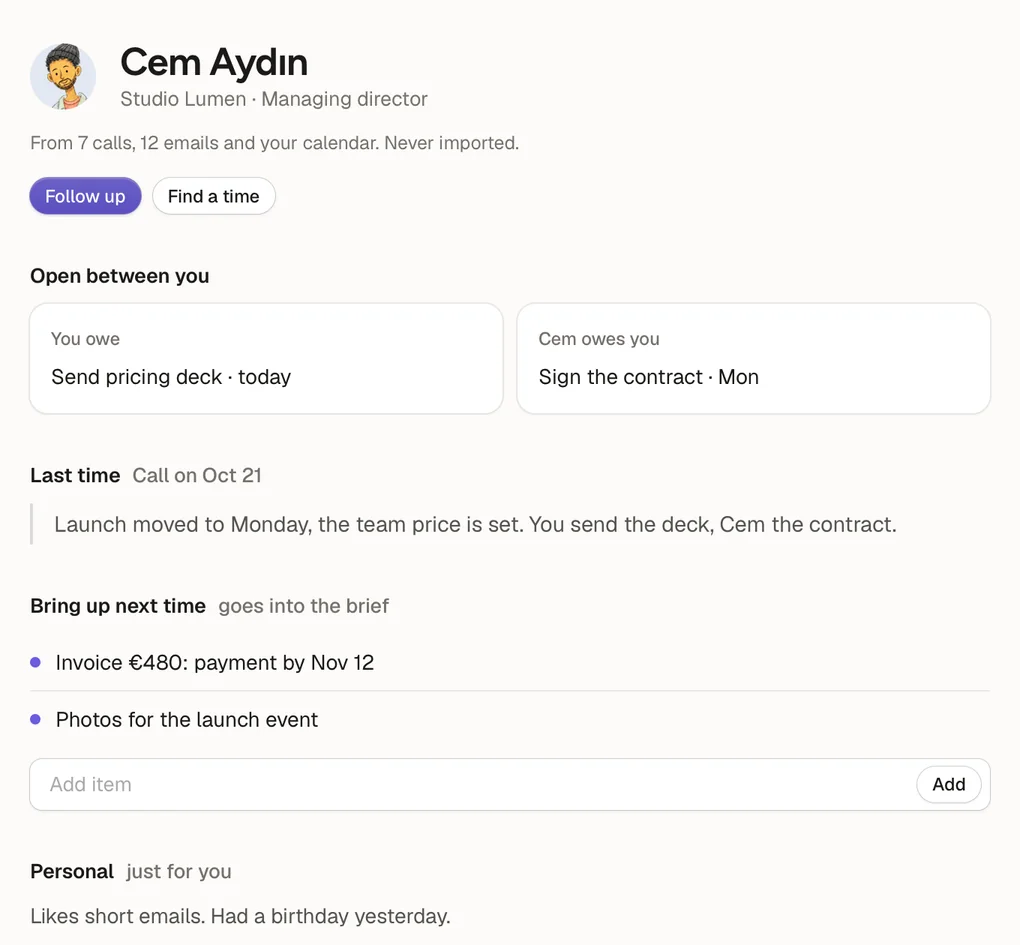
Three short parts, all you need: what’s open between you and Cem, what you agreed last time, and your own points. On the meeting’s page, with or without a call link.
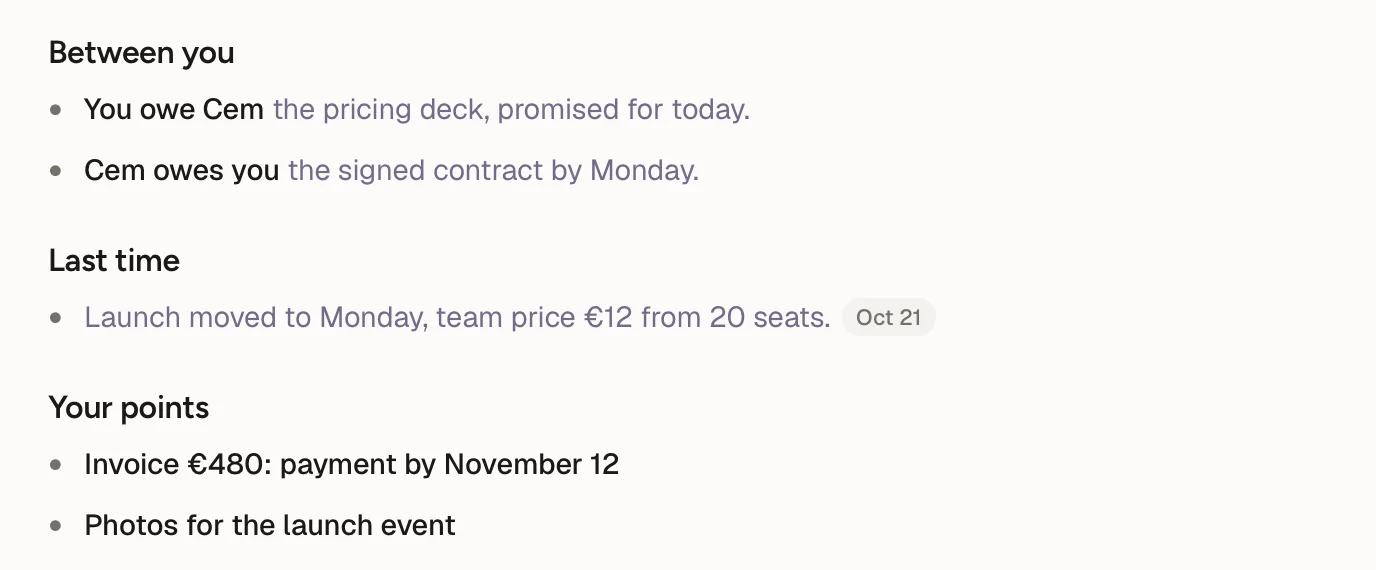
For every meeting with people, Note Way keeps a short brief: what you owe them, what they owe you, what you agreed last time. A minute before, the call knocks on the notch with it.
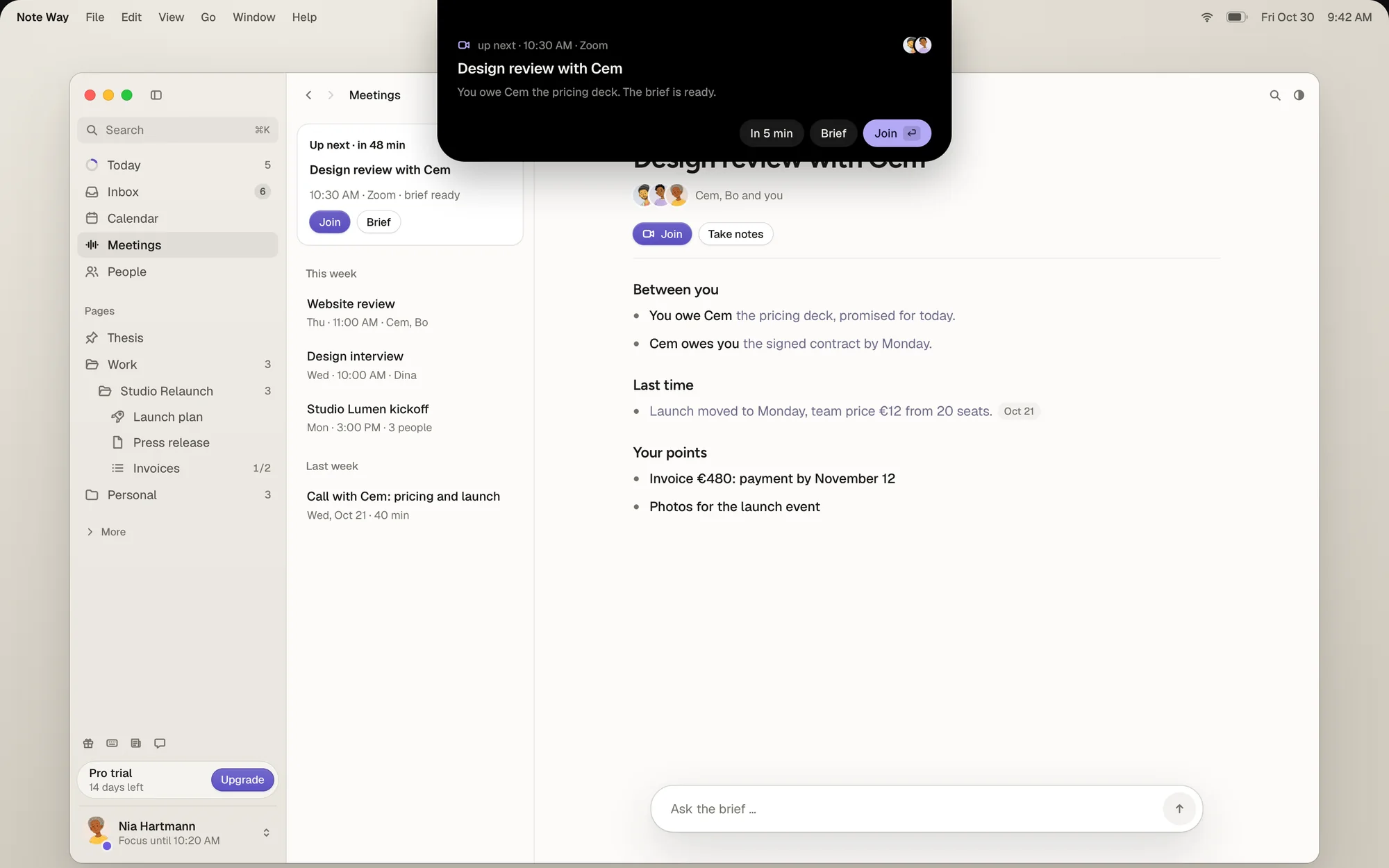
Three short parts, all you need: what’s open between you and Cem, what you agreed last time, and your own points. On the meeting’s page, with or without a call link.
The call knocks with one line from its brief. ⏎ joins, Brief opens the rest, or it comes back in five minutes.
“Waiting on” becomes Promises as soon as you owe something too: what you owe and what you’re owed, each with its day. When someone says “Thursday” in a call, the due day moves.
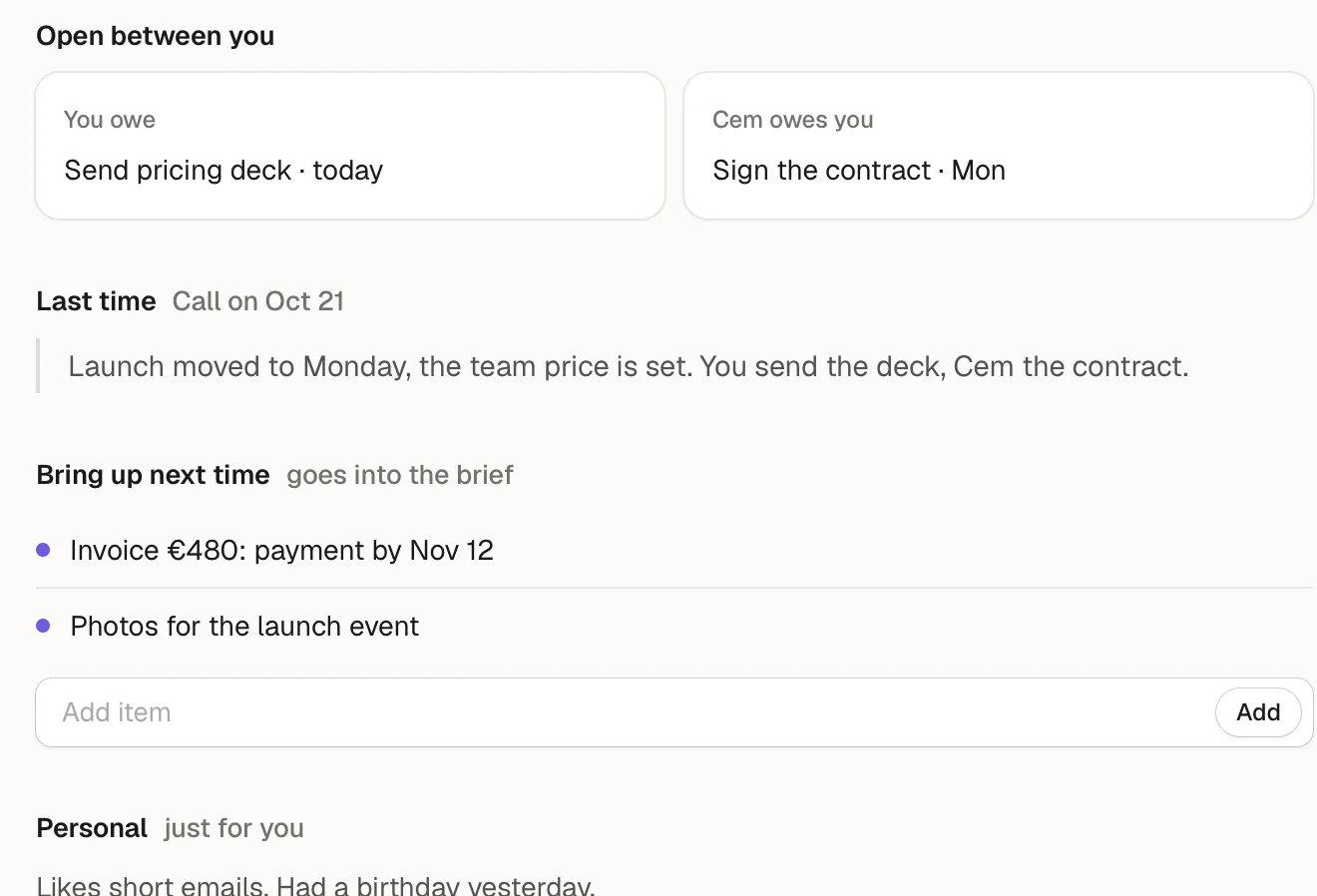
Say it once. It doesn’t clutter today: it waits for your next meeting with Alma and stands in that brief, call link or not.
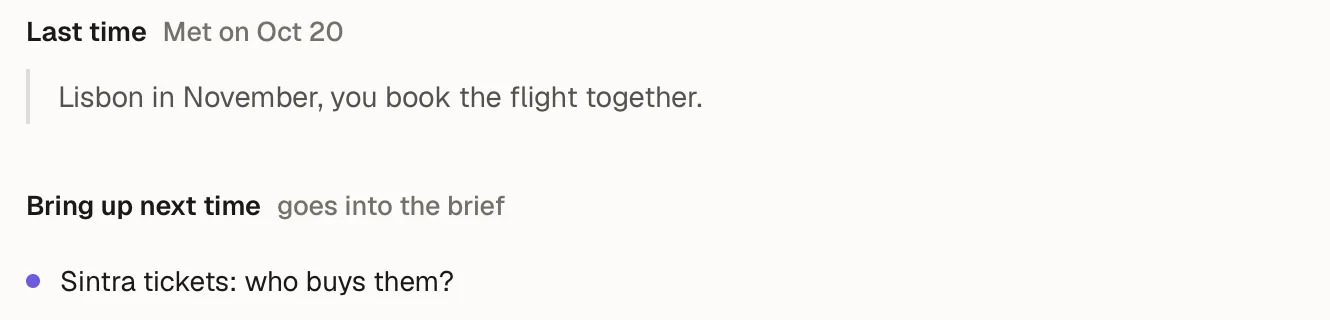
What’s open between you, what you agreed last time and what to bring up next. Plus what only you need to know, and whether drafts for them may go out without your ⏎.
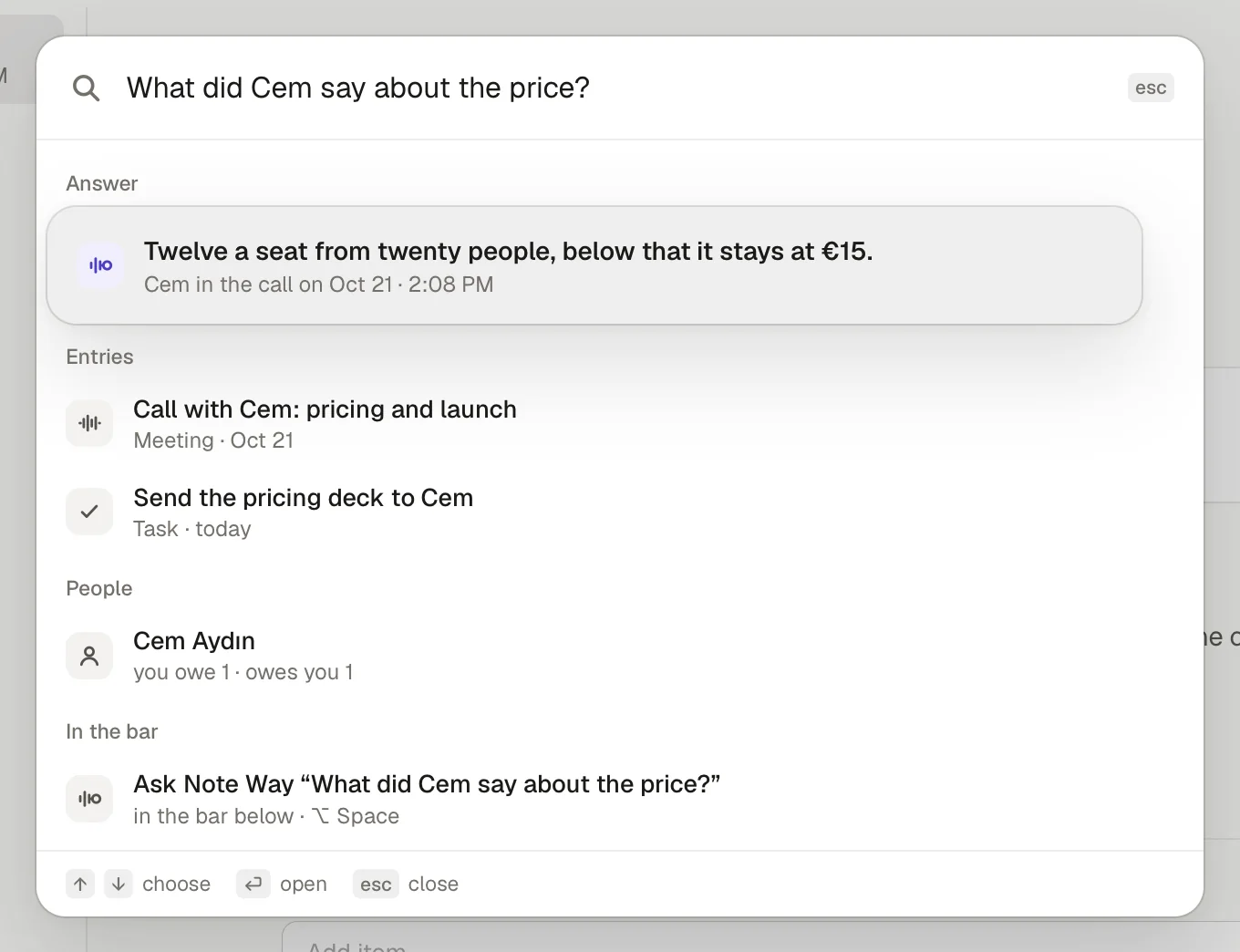
“What did Cem say about the price?” In ⌘ K, Note Way answers with the sentence itself, who said it and when, and jumps to that second in the call. Or it says honestly that it found nothing.
Every line in a brief comes from three places, and every person card shows which.
“Cem owes me the signed contract” is a promise. “Next time with Alma” waits for her.
Who said what, the points of the call and what was agreed. The sound is gone once it’s written down.
Who is in a meeting, so the brief knows whose it is.
Not your mail, not your contacts, no address book upload. A draft is copied, never sent.
People, Promises and answers from what you’ve said are part of Note Way on your Mac. The iPhone app is coming soon.
3 days of Pro free, no card. See pricing